
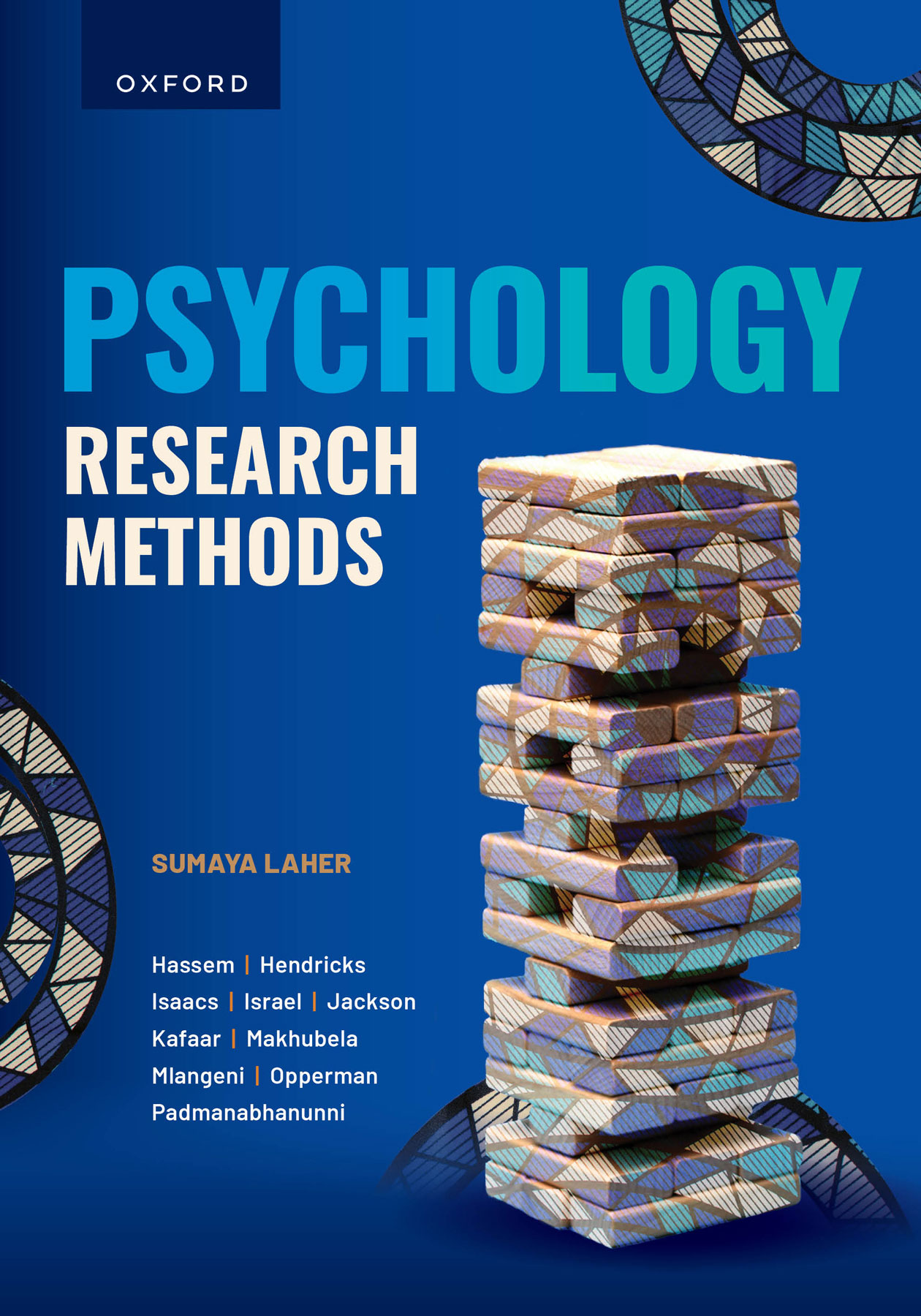
Psychology Research Methods
R599.95 (incl. VAT)
Psychology Research Methods is a foundational textbook designed for undergraduate and graduate psychology students studying research methodology. The book introduces the theory and practice of research methods in psychology, addressing primarily quantitative and qualitative approaches.
A unique feature of the text is its emphasis on the way in which social science researchers can utilise research methods to respond to contexts characterised by power imbalances, socio-economic disparities, and other inequalities. It frames research as a socially situated process that acknowledges the perspectives of the researched communities.
Ethical considerations are interwoven throughout the text, framing ethicality as a core aspect of both the researcher’s
identity and the broader knowledge-production process. This ethical grounding reinforces the book’s commitment to social justice and its vision of research as a tool for meaningful societal transformation.
Case studies and pra ct ical exercises give students a feel for what real research is and illustrate how traditional methods can be creatively transformed to become more African-centred. This develops students’ critical thinking skills preparing them to identify, select, and apply contextually relevant methods to solve real-world problems. Students are encouraged to reflect on research methods, i.e., on what they are doing and why, rather than uncritically consume theory and processes.
The book provides a contextual way of utilising research methods to conduct socially relevant research in South Africa, which could extend across global contexts.
A unique feature of the text is its emphasis on the way in which social science researchers can utilise research methods to respond to contexts characterised by power imbalances, socio-economic disparities, and other inequalities. It frames research as a socially situated process that acknowledges the perspectives of the researched communities.
Ethical considerations are interwoven throughout the text, framing ethicality as a core aspect of both the researcher's
identity and the broader knowledge-production process. This ethical grounding reinforces the book's commitment to social justice and its vision of research as a tool for meaningful societal transformation.
Case studies and pra ct ical exercises give students a feel for what real research is and illustrate how traditional methods can be creatively transformed to become more African-centred. This develops students' critical thinking skills preparing them to identify, select, and apply contextually relevant methods to solve real-world problems. Students are encouraged to reflect on research methods, i.e., on what they are doing and why, rather than uncritically consume theory and processes.
The book provides a contextual way of utilising research methods to conduct socially relevant research in South Africa, which could extend across global contexts.
Additional information
| Author/s | |
|---|---|
| ISBN | 9780190738877 |
| Edition | 000000 |
| Publication Date | 02 Dec 2025 |
| Format | |
| Pages | 0 |
| Language |
