Why is Electronic and Digital Concepts for Robotics important in the digital age?

by | Jan 10, 2024 | Coding & Robotics, TVET CR News

The introduction of Electronics and Digital Concepts for Robotics is a vital component for the upcoming generation as the times we live in require digital knowledge. Software is used to perform various tasks, social platforms allow people around the globe to interact, and various platforms support teaching and learning, etc. All of these and many other instances make use of electronic components on devices used for these various interactions. We are talking about components like diodes, resistors, capacitors, inductors, integrated circuits, etc — all of which are found in various digital devices, for example computers, laptops, cellphones and many more.

The subject in its entirety is focused on electronic components used to create robots and how these electronic components are arranged in circuits to create a working robot that will perform duties previously performed by a human being. Examples are cranes that lift objects, solar that generates electricity, machines that perform duties more easily and quicker than a human being. There is therefore a pressing need to introduce children from primary level to digital concepts so as that they can adapt to and embrace this fast-changing digital world.

S’thembiso Mathonsi

Latest News

  • How Oxford Reading Buddy is transforming reading success across Curro schools 
    On 4 September 2026, Angelique Timms, Curriculum Lead at Curro, was a guest speaker at the annual Oxford Digital Africa: Future Learning Labs event held in Cape Town. She spoke on why digital learning is becoming increasingly embedded in education and that schools face a critical question: How can technology be used to meaningfully improve literacy outcomes rather than simply digitize traditional learning.
  • Oxford University Press SA puts four school dictionaries under R200 as learners turn to AI 
    Four school dictionaries priced below R200 aim to help learners in Grades 4 to 9 build the language skills needed to understand and evaluate online answers.
  • Oxford’s Literacy Magazine: A,B,See! vol. 4 
    In the 2026 edition of Oxford’s literacy magazine, A, B, See!, we build on the themes of the third issue and explore the transition that learners make from learning to read to reading to learn, and how the shift from the Foundation Phase to the Intermediate Phase is one of the most significant milestones in a learner’s educational journey.

Oxford CAPS approved

View online samples of our trusted classroom solutions and support material across all phases and subjects.

Bigger, better, brighter

and more beautiful than ever before!

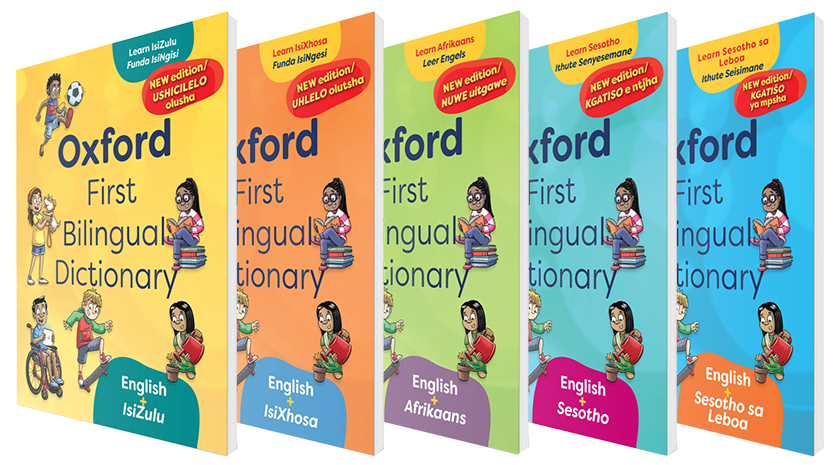
Brand new editions of our popular CAPS-linked bilingual dictionaries for South African learners in Grade R to 4

360° teaching at your fingertips

The all-in-one teacher’s toolbox