Receiving a ‘happy letter’ would have anyone but a South African scratching his head. Locally it refers to ‘a certificate approving the completed work of a building contractor, signed by a customer or beneficiary of a house in a low-cost development programme before legal transfer of ownership may take place’. It is unlikely to show up in dictionaries originating from anywhere else on the planet.
Phrases like these, and their usage, reflect a uniquely South African culture in which no less than 11 official languages have cross-pollinated one another to create forms of communication that bonds us together as a multicultural nation. To that mix, add some strong historical influences in the form of colonial Dutch and British English, and we end up with a plethora of English words, phrases and idioms you won’t find in a general English dictionary.
For instance, you could stop at a robot in Joeys, enjoy some mealiepap for breakfast or brave the mighty Orange River in a rubber duck. And this would not refer to mechanical dolls and kangaroos, unspeakably exotic food, or to a human-sized adventurer navigating a raging river on a bath toy!
With so many South Africans who are not home language speakers of English, it is essential to consult a South African English dictionary to address our specific challenges. Such a dictionary should include at least some of the following mechanisms to build vocabulary, support understanding and give speakers the confidence to communicate:
- Uniquely SA words (e.g. ‘bakkie’, meaning ‘a small open motor truck’ or 2 ‘a basin or container’)
- Informal usage (e.g. ‘indaba’, meaning ‘a concern or problem’) Example sentences (e.g. ‘It’s her indaba, so don’t bother me with it’)
- Word origins (e.g. ‘bundu’ – from Shona bundo ‘grasslands’)
- Usage notes on common mistakes (e.g. ‘Note that fulsome praise does not mean ‘generous praise’ but ‘excessive praise’)
- British versus American spelling (e.g. ‘colour’ and not ‘color’; ‘metre’ and not ‘meter’)
- SA pronunciation (e.g. ‘brak1’ adjective (said about water) [/brak/ – as in English ‘brackish’] or /bruk/ – from Afrikaans
- Curriculum words (e.g. ‘Free Burgher’ [History]; ‘orthophoto’ [Geography])
- Synonyms (e.g. a SA synonym for ‘abalone’ is ‘perlemoen’)
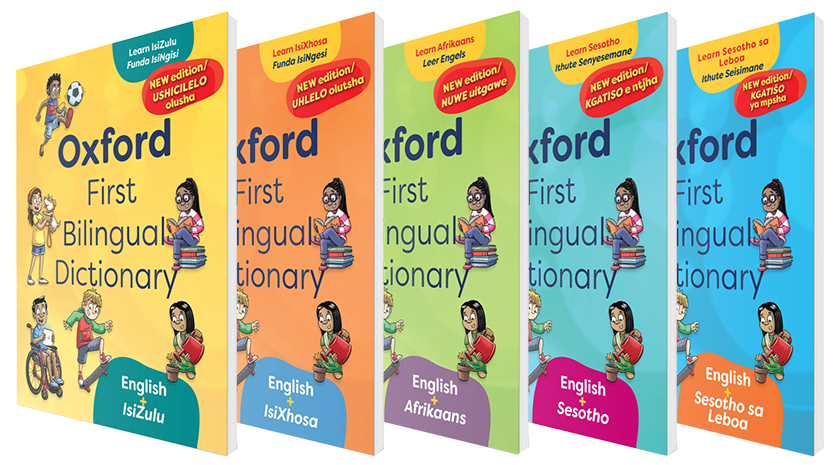
(Examples taken from the range of Oxford South African dictionaries.)