Workshop feedback shows educators want development that keeps pace with changing classrooms and support that continues after the session
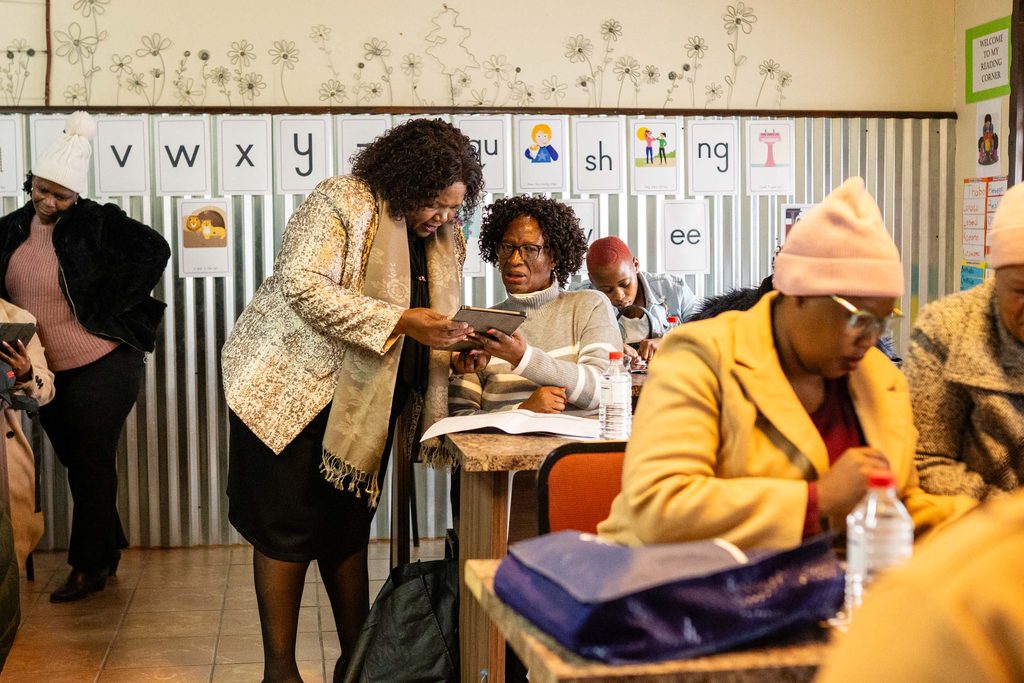
Feedback from more than 2,000 Eastern Cape teachers shows that educators want professional development that helps them solve the problems they encounter in class each day. Gathered by Oxford University Press South Africa (OUPSA), the feedback points to coding and robotics, phonics, reading, assessment and practical subjects – a mix that demonstrates how quickly teaching is changing.
Teachers must introduce digital skills while strengthening literacy and numeracy and supporting learners at different levels. When training does not keep pace, the gap is felt in teacher confidence, lesson planning and the support learners receive.
The Department of Basic Education’s School Realities 2025 report shows that roughly one in five of South Africa’s ordinary schools is in the Eastern Cape. Distance and the large number of smaller schools complicate regular in-person development, increasing the value of flexible support and resources teachers can use immediately.
During the workshops, Coding and robotics emerged as the most requested topic, with phonics second. Physical education, measurement, music and assessment also featured strongly. The pattern points to demand for digital confidence and literacy foundations, while showing that teachers want support across the full curriculum.
Better assessment helps identify learning gaps earlier. Stronger reading strategies can move learners from decoding words to understanding them. Greater confidence in coding can introduce digital thinking even where equipment is limited. Effective development turns curriculum requirements into usable teaching methods.
“Teachers are telling us what would help in their classrooms,” says Zimkhitha Gamedala, Oxford’s Eastern Cape Provincial Manager. “When support responds to those realities, teachers can apply it immediately and learners experience more consistent, confident teaching.”
A separate Oxford survey indicated that development must fit around classroom responsibilities. Preferences were closely split, with 53% favouring online workshops and 47% face-to-face sessions. Almost half preferred two-hour sessions and downloadable resources.
Effective support therefore needs to be flexible, practical and continuous: shorter online and regional sessions, curriculum-aligned resources, follow-up guidance and content shaped by local feedback. For remote schools, this can reduce professional isolation and help useful methods travel beyond one workshop.
The good news is that Eastern Cape teachers have articulated their priorities. Districts, training providers, publishers and school leaders now have a clearer basis for directing limited capacity towards immediate classroom needs.
Oxford’s teacher-development workshops are one example of this approach, pairing real training with curriculum-aligned resources and flexible delivery options.
“Every response helps us develop content that is relevant to classroom realities,” Gamedala says. “When teachers leave with something useful, professional development becomes part of classroom practice rather than a once-off event.”
Teachers and school leaders can find information about Oxford’s upcoming workshops at https://bit.ly/4f0hUhL.